Total Pageviews

Labels

Search This Blog

Showing posts with label 1st BACH. Show all posts

Widening English Exam - 1st Bac

Wednesday, May 29, 2013

Grammar:- Verb tenses: Present simple, present continuous, present perfect- Questions: Indirect, Subject, Object, Yes/no, Question tag- Infinitive + to- So do I / Neither do I
- Causative have (passive): have something done

Vocabulary: - Vocabulary unit 1 New Framework 4 (free-time activities, compound adjetives) - Vocabulary unit 2 (expressions with 'in')- Vocabulary unit 3 (means of transport, leisure activities, be likely to/be due to/be bond to, describing holidays and places, suggestions and preferences)
- Vocabulary unit 4 (health and lifestyle collocations, battle of the sexes text)
- Get + adjective- Castle 01x01, 01x02, 01x03- Illnesses- How to start a conversation- Halloween vocabulary (crosswords)- Character/appearance- Cooking

- Environment


Translations:- Listening SB 8 (Reference guide book)- Ahora tú (blog)- Children's Rights- Angelina Jolie's letters (only first paragraph)

Writings:
- Description of someone who you admire


Online exercises

Friday, May 10, 2013

http://www.xtec.cat/~ogodoy/sac/rephrasing/rephrexercises.htm

PASSIVE VIDEO EXPLANATION

Friday, April 19, 2013

MODAL VERBS VIDEOS

I love these videos. Great explanation about modal verbs:


The first part is pretty interesting to know how modals work. The second part is explained in a different way as we know. The third part can be confussing...


Another way of explaining modals: (4 vídeos together: Introduction / Ability / Permission / Obligation)


This video has songs using modals:


Conditional Songs

Wednesday, April 03, 2013


If I never had a cent I would be poor.
If it hadn't been or Cotton-Eye Joe I would have been alone all my life.
If my true love were gone I would look for another love!
If I get locked up tonight I will cry.
If I can't have youi I will fight for you until the end.
If you go don't come here another time again.
If you don't know me by now I'm sorry for you.
If I knew you were coming I would have stayed here.
If I were a boy I would treat women very well.
If you leave me now you will be very happy.

Relative sentences

Monday, March 25, 2013

Here you are a link with relative sentences. Click here.

Big truth!

Tuesday, December 11, 2012


Widening English Exam - 1st Bacalaureate - 1st Term

Tuesday, November 20, 2012

Grammar:
- Verb tenses: Present simple, present continuous, present perfect
- Questions: Indirect, Subject, Object, Yes/no, Question tag
- Infinitive + to

Vocabulary:
- Vocabulary unit 1 New Framework 4
- Get + adjective
- Castle 01x01, 01x02, 01x03
- Illnesses
- How to start a conversation
- Halloween vocabulary (crosswords)
- Character/appearance

Translations:
- Listening SB 8 (Reference guide book)
- Ahora tú (blog)
- Children's Rights

Pasos a seguir para traducir un texto del inglés al castellano

Monday, November 19, 2012

Por la globalización y gracias a las nuevas tecnologías, cada vez se reciben más documentos en inglés que necesitan traducción. Debido a esta gran demanda, existen traductores, tanto automáticos (Google Traductoro Babel-fish, online ambos) como humanos, que se dedican a esta labor, pero ¿Qué pasos se deben seguir a la hora de traducir un texto en inglés?
1. Leer todo el texto
Es importante leer todo el texto antes de empezar a traducir. No se debe leer el primer párrafo y comenzar con la traducción, pues se pueden traducir incorrectamente conceptos que se clarifican con posterioridad en el texto.
Durante la fase de lectura se deben detectar los problemas que se encontrarán después al traducir, aunque no se debe buscar todavía solución para ellos: palabras que no se entiendan, estructuras complicadas, dobles sentidos, etc.
2. Documentarse
Una vez se ha leído todo el texto y sabiendo la temática con la que está relacionado, si es pertinente se debe buscar contenido similar en la web para descubrir cuáles son los términos más utilizados en ambos idiomas.
3. Comenzar a traducir
Después de la lectura y de la documentación, se puede empezar a traducir; sin embargo, no se debe hacer palabra por palabra (como hacen los programas automáticos de traducción) sino que es más importante captar el sentido de la frase y pasarla al español sin hacer calcos de estructuras en inglés.
Algunos problemas frecuentes que tienen lugar por traducir palabra por palabra son los siguientes:
Abuso de pasivas, que en inglés se usan mucho pero en español no.
Uso de los pronombres en español cuando son innecesarios.
Empleo de giros u expresiones calcadas del inglés que en español resultan artificiales.
En este paso se deben buscar las palabras desconocidas, no sólo en diccionarios bilingües (Wordreference.com, por ejemplo) sino también en monolingües para captar perfectamente el sentido de la palabra (Merriam-webster.com, por ejemplo).
4. Revisar la traducción
Es muy importante revisar las traducciones, pues suelen escaparse fallos fácilmente detectables.

Además, si se deja reposar la traducción unos minutos, horas o días, las estructuras extrañas y que suenan artificiales serán más fáciles de detectar.
Traducir no es fácil, especialmente dependiendo del texto, pero siendo organizados y siguiendo esta metodología la traducción tiene muchas posibilidades de ser un éxito.

Reading Books - 2012/2013

Monday, September 17, 2012

URSE
TERM
BOOK
3 ESO
1
 Lost I / A trip to the stars
3 ESO
2
 Lost I / A trip to the stars
ESO
3
 Lost II
ESO
1
 Iraq in fragments
ESO
2
 The curious case of Benjamin Button
ESO
3
 Dracula
1 BACH
1
 Jane Eyre
1 BACH
2
 The 39 steps
1 BACH
3
 The Elephant Man
2 BACH
1
 White Fang
2 BACH
2
 Brave New World
2 BACH
3
 Sea Bandits

Extra Exercises 1st Bachillerato

Monday, June 06, 2011

Here you are a few exercises about grammar and vocabulary. (Units 1-8)
Click here.

Relative sentences

Monday, March 07, 2011

Here you are an extra activity about relative sentences. Level: easy.


.pdf   Click here.
.doc  Click here.

Copyright © 28/1/2010  falafel

And another one: pdf / doc   Level: medium-high

Copyright © 11/1/2009  Malvarosa

EXTRA EXERCISES (UNITS 1-2): (Book In-gear1)

Tuesday, February 22, 2011

They are not compulsory but it helps... ;-)


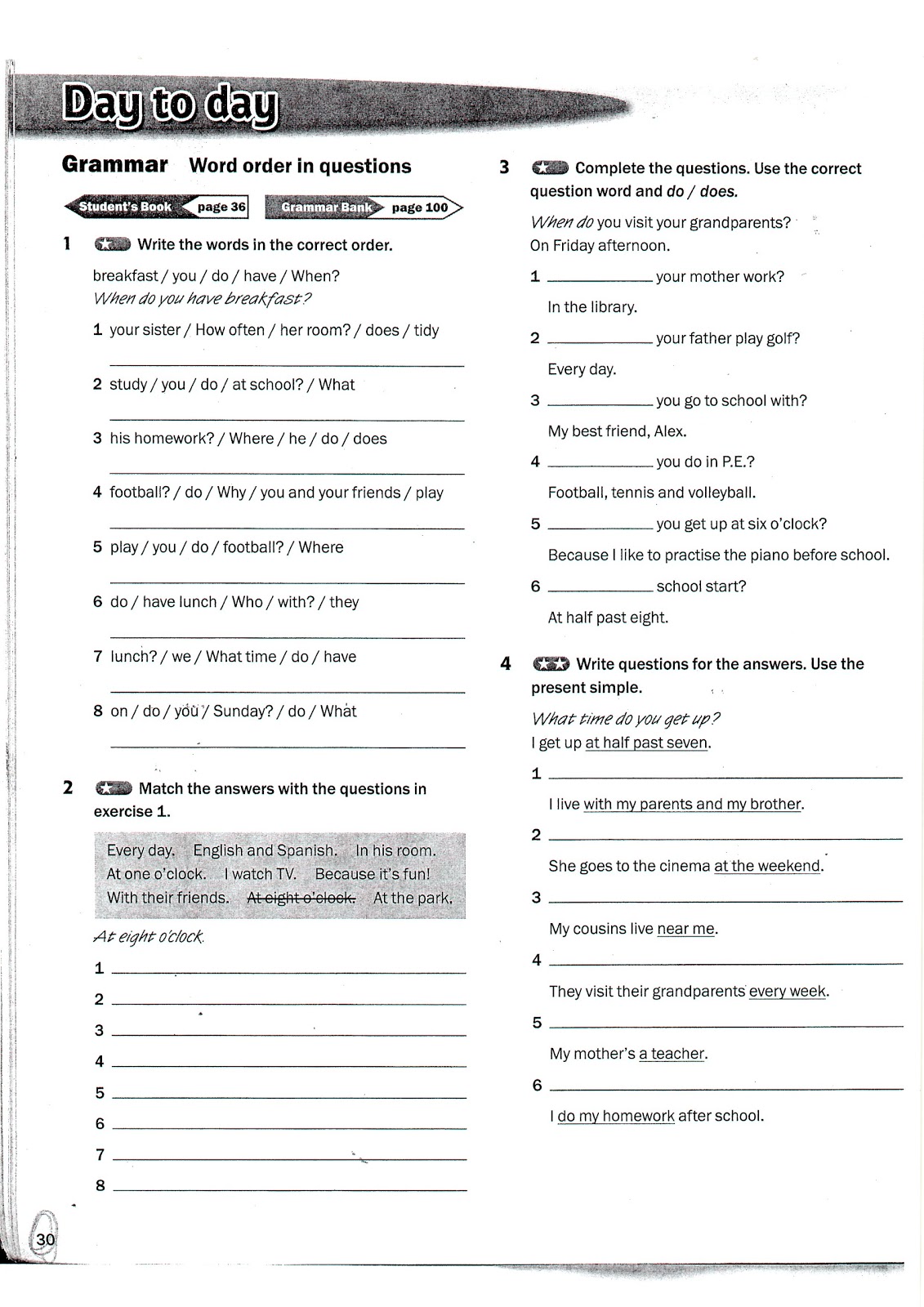
Questions exercises


Present simple vs Present continuous

Present Simple vs Present Continuous worksheets:


Phrasal Verbs

Good link: click here

Pronunciación de la Terminación -ED de los Verbos en Tiempo Pasado

Wednesday, December 08, 2010


Básicamente, existen en inglés tres formas de pronunciar la terminación -ed de los verbos cuando se enuncian en tiempo pasado. Vamos a ver cada uno:


Sonido [d]
Cuando el verbo termina en sonido vibrado (es decir, cuando al pronunciar la última letra sientes que el sonido vibra en tu garganta), entonces, para pronunciar el pasado en -ed, se utiliza el sonido vibrado [d]

listenlistened[lísend]
studystudied[stádid]
enterentered[énterd]
receivereceived[risívd]
memorizememorized[mémoraizd]
jamjammed[yámd]
robrobbed[róbd]
clogclogged[clogd]

Sonido [t]
Cuando el verbo termina en sonido sordo (es decir, cuando al pronunciar la última letra el sonido no vibra, solo truena en la garganta o en los labios y dientes), entonces, para pronunciar el pasado en -ed, se utiliza el sonido sordo [t]

walkwalked[uókt]
talktalked[tókt]
stopstopped[stopt]
jumpjumped[yompt]
laughlaughed[laft]
practicepracticed[práctist]
matchmatched[matcht]
watchwatched[uátcht]
washwashed[uásht]
closeclosed[clost]

Sonido [Id]
Cuando el verbo termina en sonido [t] o en sonido [d] (observa que en los grupos anteriores ninguno de los verbos termina en esos sonidos), entonces, para pronunciar el pasado en -ed, se utiliza el sonido [êd] , cuya vocal suena muy cerrada y breve.

repeatrepeated[ripírId]
inventinvented[invéntId]
waitwaited[uéirId]
wantwanted[uántId]
decidedecided[disáidId]
addadded[ádId]
includeincluded[inclúdId]
needneeded[nídId]

Popular Posts


Lorem

Ipsum

Dolor